[variable_price id="3311"]
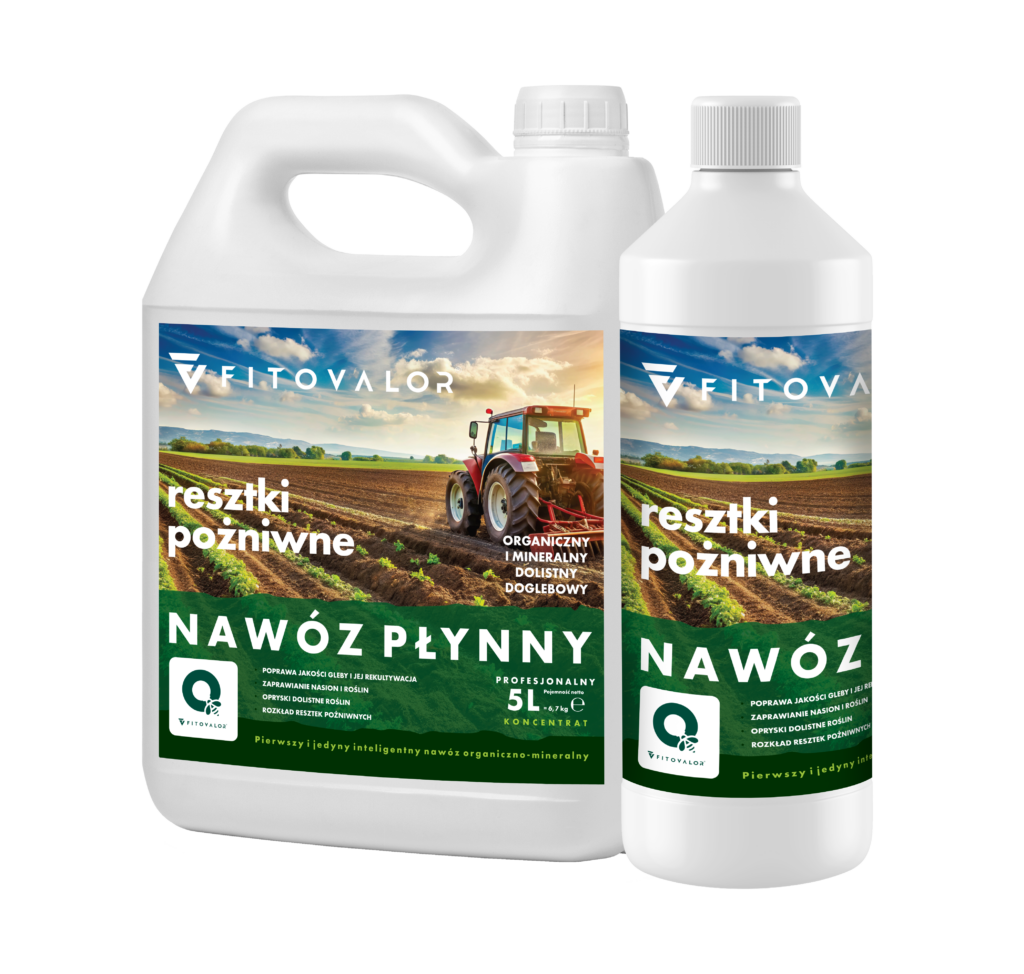
The power of innovation in your hands: FITOVALOR O-Crop Residues is used to promote the decomposition of crop residues left in the field after harvesting. This process helps clear the field of organic debris, such as straw, stalks, leaves, and roots, that remain after the harvest. Accelerating this process contributes to the faster conversion of organic residues into nutrients available to the soil, which has a beneficial effect on its structure and fertility.
Improves soil fertility: The use of FITOVALOR O-Crop Residues enriches the soil with nutrients that are essential for proper plant growth. Supporting the decomposition of crop residues in the field introduces valuable micronutrients and nutrients into the soil, improving its structure, water retention capacity, and microbial activity. All of this contributes to increased yields and the health of crops.
Plant growth stimulation: FITOVALOR O-Crop Residues promotes plant growth and development by improving soil properties. Plants grown in soil enriched with the concentrate have better access to nutrients, which contributes to their healthier and more efficient growth. Improved soil structure also promotes better root development, which is crucial for the plants’ stability and their ability to absorb water and nutrients.
Sandy soils:
Clay soils:
Soils low in organic matter:
Saline soils:
Acidic soils:
Degraded soils:
Light (sandy) soils:
Heavy (clay) soils:
Clay soils:
Acidic soils:
Alkaline soils:
Brown soils:
Podzolic soils:
Loess soils:
In the fall, after the harvest:
The best time to apply FITOVALOR O-Crop Residues is in the fall, immediately after the harvest is complete. At this time, plant residues such as stems, leaves, and roots remain in the fields, which can be difficult to decompose.
Application times | FITOVALOR Concentrate – Post-harvest residues L/ha |
The best time to apply FITOVALOR fertilizer—specifically, for crop residues—is in the fall, after the harvest is complete. At that time, plant residues are present in the field, and the product can help break them down and facilitate organic mineralization before the next growing season. | 10 liters of concentrate per 1 hectare Dilute to 250–400 L, depending on weather conditions; add 10 kg of urea per ton of crop residue to the mixture in the appropriate proportion, and spray over 1 hectare. |
| Total nitrogen (N) content | 19,3% |
| Organic nitrogen (N) content of plant origin | 2,2% |
| Nitrate nitrogen (N) content | 3,1% |
| Ammonium nitrogen (N) | 1,4% |
| Amide nitrogen (N) content | 12,6% |
| Organic carbon (C) content on a dry weight basis | 53,9% |
| Dry matter content | 37,7% |
| Additional information: | |
| Humic acid content in dry matter | 28,5% (m/m) |
| Humin acid content in dry matter | 22.3% (m/m) |
| Fulvic acid content in dry matter | 6,2% (m/m) |
Briefly tell us what you need / expect. We will contact you!